
In this second blog post in my 5 part series on literary elements, I’m going to talk about how I work with my novel’s setting.
Examples could be:
*19th century England in an expansive castle
*autumn in a small town in Vermont
*present day touring the Amazon rainforest and a storm comes up
*23rd century on Mars
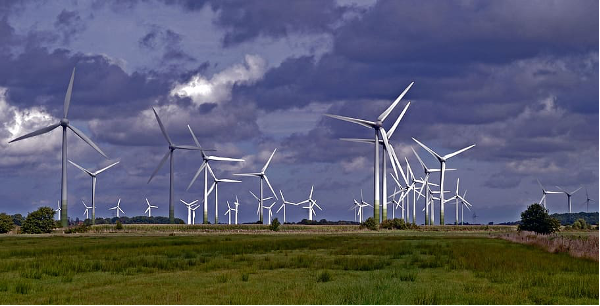
What type of story comes to mind when you look at this picture of wind turbines? Look how many of them there are and the ominous dark sky. The landscape is very flat, hinting at potential places where the story could take place. Imagine the sound of all those giant blades churning at the same time. How does the picture make you feel? This setting plays a big part in one of my upcoming novels. (more on that another time)
Settings can be real, like New York City, but they can also be completely made up like Hogwarts in the Harry Potter world or a small town in the Midwest that doesn’t actually exist.
Your setting helps you create an environment for your novel’s world, which will greatly influence not only your plot, but also obstacles for your characters. A story that takes place in a remote Arctic village versus one where everyone is navigating the challenges of a huge metropolis definitely contain unique factors based on these locations.
There’s also an emotional element to setting. Imagine having a character, alone in an old Victorian house on a property thirty minutes outside of the city with the closest neighbor over a mile away. Just the description of this setting indicates that there will most likely be suspense in the story and that the character is very isolated, which they may or may not like.
In my first novel, When Love Won’t Die, my settings include a country home on a large piece of property on a quiet road and a busy city. When I wanted to create suspense and showcase my protagonist’s paranoia about being watched and followed, although the secluded country home lent itself to those scenarios, I was also able to have my character’s unease when she’s in the city and always looking over her shoulder.
In my second suspense novel, Amorous Obsession, a limousine ride in Toronto creates an unexpected situation for my character. I enjoy using crowded places over isolation sometimes to challenge my character’s actions and reactions, but also to surprise the readers with unexpected suspense.
My psychological thriller, They’re Watching, isolates a family on an acreage that borders a wind farm in North Dakota. Being isolated definitely plays a big role in the way my characters act and react to certain things. Add to that only having one vehicle, meaning that when one of the family members has gone to town, the other family residents aren’t able to go anywhere off of the property, adding to the suspense.
Once I have decided on my setting for a particular scene, I not only provide visual descriptions, but I allow my characters to experience this time and place by the other senses as well. In the fall, for example, my character could hear her footsteps crunch under her as she walks on the pathway covered with dried leaves. At the beach my character could taste the salt in the air and feel the wind as it blows her hair. What smells are associated with this particular setting, like the brand new leather upholstery and the pine scented air freshener in the limousine, for example.
Many writers think of their setting as another character in the story because of its ability to evoke mood and emotion in both the characters and the readers. What emotions do you feel if the setting is a quaint country inn in the summer versus an isolated resort in the mountains in the dead of winter?
If I was reading about a character who became lost in the woods during a winter storm and came upon a run-down cabin as it was getting dark, I would imagine they would be apprehensive about checking it out but desperate to get out of the cold. To the contrary, what if the character was at a beach resort lounging by the pool, sipping an ice cold cocktail out of a coconut shell. And what if they were on their honeymoon? But, if the honeymoon character was lost in the woods instead of at the resort, the story would most certainly be different because of the setting.
For me, setting can be a story starter, like a writing prompt. Often I use setting to initiate the plot of my story, but once I insert my characters, they go hand in hand in launching my plot.
Try picturing a setting, real or imagined, and see where your imagination might take you.